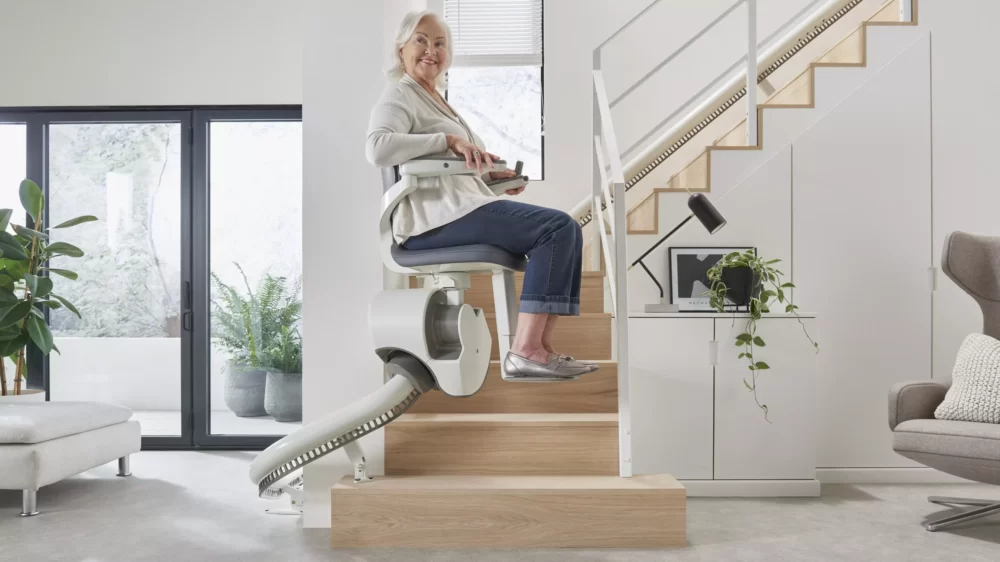
Are Stairlifts A Good Idea? A Guide For Families

Do you have an elderly loved one who is struggling to get around their home because of issues with their mobility?
Access BDD is on hand to explain why they may need a stairlift, with this solution helping them to retain their independence as well as giving the rest of your family peace of mind that elderly loved ones can continue to be safe in their home.
What is a Stairlift?
You should consider buying a stairlift for a beloved family member when they are experiencing issues getting up and down a set of stairs without any assistance. Or if they have stopped using a staircase at all and instead confined themselves to just the lower level of a house.
Stairlifts are also fantastic solutions if someone has a high risk of falling, so think if someone you know has any of these problems:
- A history of falling that cannot be put down as a one-off occurrence
- Bad balance
- Bad flexibility
- Frequent unsteadiness and bouts of dizziness when standing up or walking
- Lack of stamina
- Lack of strength
- Stiff hips, knees and lower back
- Trouble getting up and down stairs swiftly in the event of an emergency
- Visual impairment
- Weak muscles
If an elderly loved one has issues with their breathing, has suffered a stroke, has osteoporosis, or experiences painful, inflamed joints from arthritis, fitting a stairlift in their home can help them to get around their property more comfortably too.
Be aware if elderly loved ones pull themselves up a staircase using a bannister as well. Handrails on the stairs are there for balance but using them to climb steps can place a lot of strain on the neck, back and shoulders – increasing the risk of an injury.

How to Assess the Need for a Stairlift
The Timed Up and Go test is a great method to determine if someone you care about could benefit from having a stairlift installed in their homes.
This assessment is well regarded by many healthcare professionals, with the following simple steps needing to be followed:
- Get your elderly loved one to sit in a sturdy chair that is designed with armrests.
- Start a stopwatch.
- Ask your elderly loved one to stand up from the chair.
- Request that they walk three metres in front of them, turn around and walk back to the chair.
- Ask them to sit back down into the chair.
- Stop the stopwatch.
If someone completes steps three to five in under ten seconds, this indicates that they typically have normal mobility.
Anything higher than ten seconds usually shows at least some mild limitations in their mobility though, with a higher likelihood of a person suffering a fall or having difficulty with their balance the longer this test time is.
When this is the case, reduce the physical strain that someone with mobility issues puts on their body as they try and get around their home by installing a stairlift in their property.
Emotional & Practical Benefits of Stairlifts for Families
Elderly members of your family can become worried that they will need to move out of their home and relocate into a bungalow when they develop mobility problems. They can also feel as though they are burdening others by needing assistance to climb stairs to get to a bathroom or bedroom.
With a stairlift in place though, your elderly loved ones can retain their independence and continue to make full use of their entire property. They will also be able to get up and down a staircase without concerns that this is going to be a painful or frightening experience.
Valerie Smith was very pleased when she and her late husband decided to invest in a Flow X stairlift for their southeast England home via Access BDD dealer EMS Lifts after Valerie’s husband was diagnosed with Parkinson’s.
In part of a case study that can be read in full here, Valerie pointed out: “The Flow X is terrific and without it my husband would either have been confined to living either downstairs or upstairs.
“The entire process from our first enquiry to installation was great and we were very happy. In fact, I have decided to futureproof the house by keeping the stairlift so I will not have to move should I become less mobile in the future.”
Installing stairlifts for elderly loved ones can provide peace of mind for you and the rest of your family too, as you can be reassured that someone with mobility issues can use stairs safely even when you are not watching or assisting them.
As we outline in this guide, a stairlift is also designed to be a very secure piece of mobility equipment. Armrests and footrests will keep your elderly loved one comfortable as they get up and down stairs, while seat belts and sensors are just a couple of the features built in to enhance how safe a stairlift is when in motion.
Making a Stairlift Decision Together as a Family
Have you decided that stairlifts are certainly a good idea for your elderly loved ones? When shopping for this mobility solution, make sure you do so as a family.
Someone who is going to start to use a stairlift in their home will need to choose the right type of equipment to suit their property’s architecture. So, give them the opportunity to try out straight and curved stairlifts, as well as stairlifts built for narrow staircases.
They will have some personal preferences for tailoring a stairlift so that it fits in perfectly with the look of their beloved abode too. For instance, our stairlifts are available in various contemporary, high-quality fabrics and finishes, while even the single rail can be styled in a selection of colours to match a staircase.
Take the first step to finding a reliable stairlift as a family by using our excellent interactive map to locate a trusted and professional Access BDD near your today.