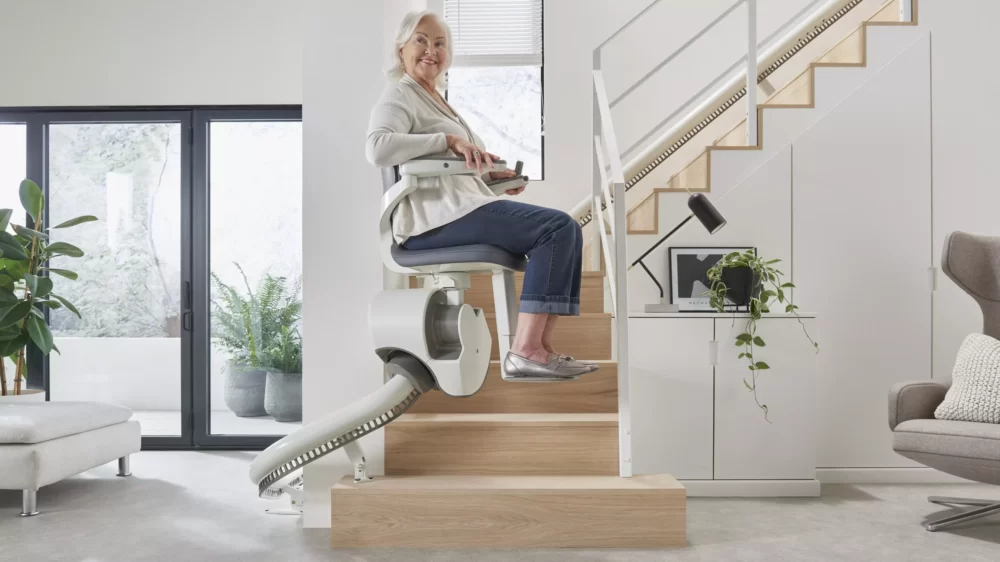
What Stairlift Do I Need? Covering All the Stairlift Types

Choosing the right stairlift is an important step toward maintaining independence and mobility whilst at home. With so many different models available today, it can easily become overwhelming trying to figure out which stairlift suits your needs best.
This guide breaks down the main types of stairlifts in the UK, including modern innovations and new stairlift options, to help you find the ideal solution for your home and lifestyle.
Main Types of Stairlifts in the UK
Whether you have a straight staircase, a curved layout, or require additional support, understanding the different types of stairlifts in the UK is key to making the right choice.
1. Straight Stairlifts
The most common and cost-effective option, straight stairlifts are ideal for single-flight staircases with no bends, making them a perfect fit for standard UK homes. They offer a quick, low-cost installation and are often the most straightforward solution for improving mobility.
Modern straight stairlifts now come with features like slimline rails, powered swivel seats, and remote controls, enhancing both convenience and aesthetics.
2. Curved Stairlifts
Curved stairlifts are best suited for stairs with turns, split levels, or more complex, multi-floor layouts. They’re also ideal for shared staircases or homes with tight corners that require a tailored fit.
Since curved stairlifts are custom-made to match the exact dimensions and shape of your staircase, lead times and costs are typically higher than those for standard straight models.
3. Outdoor Stairlifts
An outdoor stairlift is specifically designed to withstand the UK’s unpredictable weather conditions. These models are waterproof, UV-resistant, and typically include protective covers for added durability.
They are ideal for garden paths, steps leading to a garage or basement entrance, and properties in coastal or consistently wet regions. Common features of outdoor stairlifts include weather-sealed controls, rust-resistant materials, and slip-resistant footrests, ensuring safe and reliable use all year round.
4. Perch Stairlifts*
If bending your knees or sitting fully is uncomfortable, a perch stairlift is a practical solution that allows you to travel in a semi-standing position.
This type of stairlift is especially useful for people with limited knee flexion, arthritis, or hip conditions, and is also well-suited to narrow staircases where a seated option might not fit comfortably.
Safety features typically include a secure perch seat, a safety belt, and arm supports to ensure stability during use.
5. Standing Stairlifts*
Not everyone finds it easy (or even possible) to sit down on a stairlift. That’s where standing stairlifts come in. Unlike perch models, which give you a small seat to lean against, these are designed for people who need to stay completely upright while riding.
They don’t have a seat, so you’ll be standing the whole time, holding onto the side rails for balance. It’s a good option if sitting just doesn’t work for you, or if the stairs in your home are too narrow for a seated lift. That said, they’re not ideal for everyone. You’ll need a decent sense of balance to use one safely, and in many cases, it’s best if someone’s around to help when needed.
6. Heavy-Duty Stairlifts*
Heavy-duty stairlifts, sometimes called bariatric models, are built for comfort and strength. They’re made for folks who need a bit more room and support, often handling weight limits of around 25 to 30 stone (160 to 190 kg).
These stairlifts usually come with a wider seat, a sturdier frame, and a bit of extra padding for comfort. They’re a solid pick for anyone who finds standard models too small or not supportive enough. If your staircase is wide enough and you want a reliable, comfortable ride, a heavy-duty option could be just the thing. Some even come with dual motors or reinforced tracks to make sure everything runs smoothly and safely.
What’s New in the World of Stairlifts?
Technology is reshaping the stairlift industry. These new types of stairlifts focus on comfort, efficiency, and smarter controls:
- Powered swivel and folding mechanisms to ease entry and exit
- Slimline track systems for minimal space use
- Rechargeable battery options that work during power cuts
- Modular rail designs for faster installation
These new stairlift types give users more options than ever to match a stairlift to both their needs and their space.
Things Worth Thinking About Before You Decide
Take a Look at Your Stairs First
Determine whether your staircase is straight, curved, or located outdoors. Be sure to measure the full width of the stairs and take note of any landings, doorways, or obstructions that could affect the stairlift’s fit or operation.
Think About What Feels Comfortable for You
Consider your physical needs; can you bend your knees comfortably to sit? If not, a perch or standing stairlift may be more suitable. Also think about whether you require extra support for balance or need a stairlift with a higher weight capacity to ensure safe and comfortable use.
Plan Ahead for What You Might Need Later
Ponder how your condition might change over time. If it’s likely to progress, you may benefit from future-proofing your stairlift with additional features such as powered swivel seats, adjustable armrests, or upgraded controls to accommodate evolving mobility needs.
Finding the Stairlift That Just Works for You
No matter the shape of your stairs, or whether they’re inside or out, there’s a stairlift out there that can make life easier. From the classic straight models to newer designs with clever tech built in, the choices today are all about helping you stay comfortable, safe, and independent at home.
Need help choosing? Contact a trusted stairlift specialist to discuss your needs and book a free home assessment.
[*] Note: While Access BDD specialises in straight, curved, and outdoor stairlifts, we’ve included other types for comparison to help you understand all your options.